
A well-known hotel, but identified as undesirable by a younger clientele.
The influence strategy helped to reactivate desire and projection before booking.
Mission context
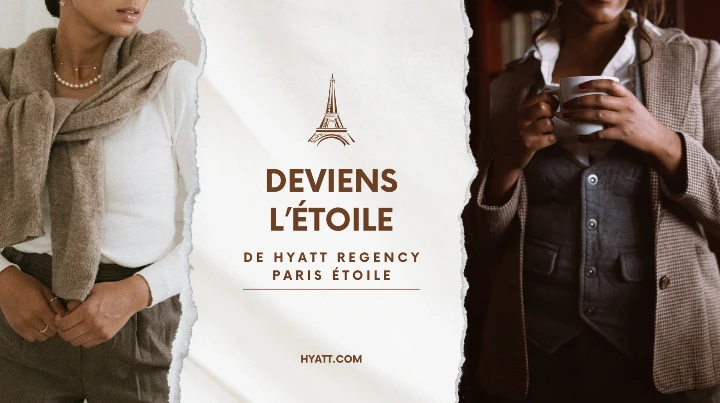
The Hyatt Regency Paris Étoile is a premium hotel historically positioned for a business, international, and high-end clientele.
While this positioning ensured a base of loyal customers, it showed its limits in a context of evolving usage and expectations, particularly among a younger, more connected European clientele that is more sensitive to lived experiences than to institutional promises.
The challenge for the establishment was not to transform its brand image, but toevolve it without degrading it, making it more emotionally accessible and more readable on digital channels.
It is in this context that Éclats was solicited.
Diagnosis
The analysis highlighted several structural issues:
An image perceived as very business-oriented, not experiential
A difficulty in creating attachment and recurrence among existing customers
A lack of embodied content allowing projection into the real experience
A social media presence insufficiently aligned with the usage of younger audiences
The main barrier was not the quality of the offer, but itsability to be perceived, understood, and desired prior to the stay.
Implemented solution
Éclats designed ainfluencer marketing and UGC content strategyaimed at strengthening social proof and emotional projection.
The strategic logic was based on three complementary levers:
A multi-profile ambassador strategy
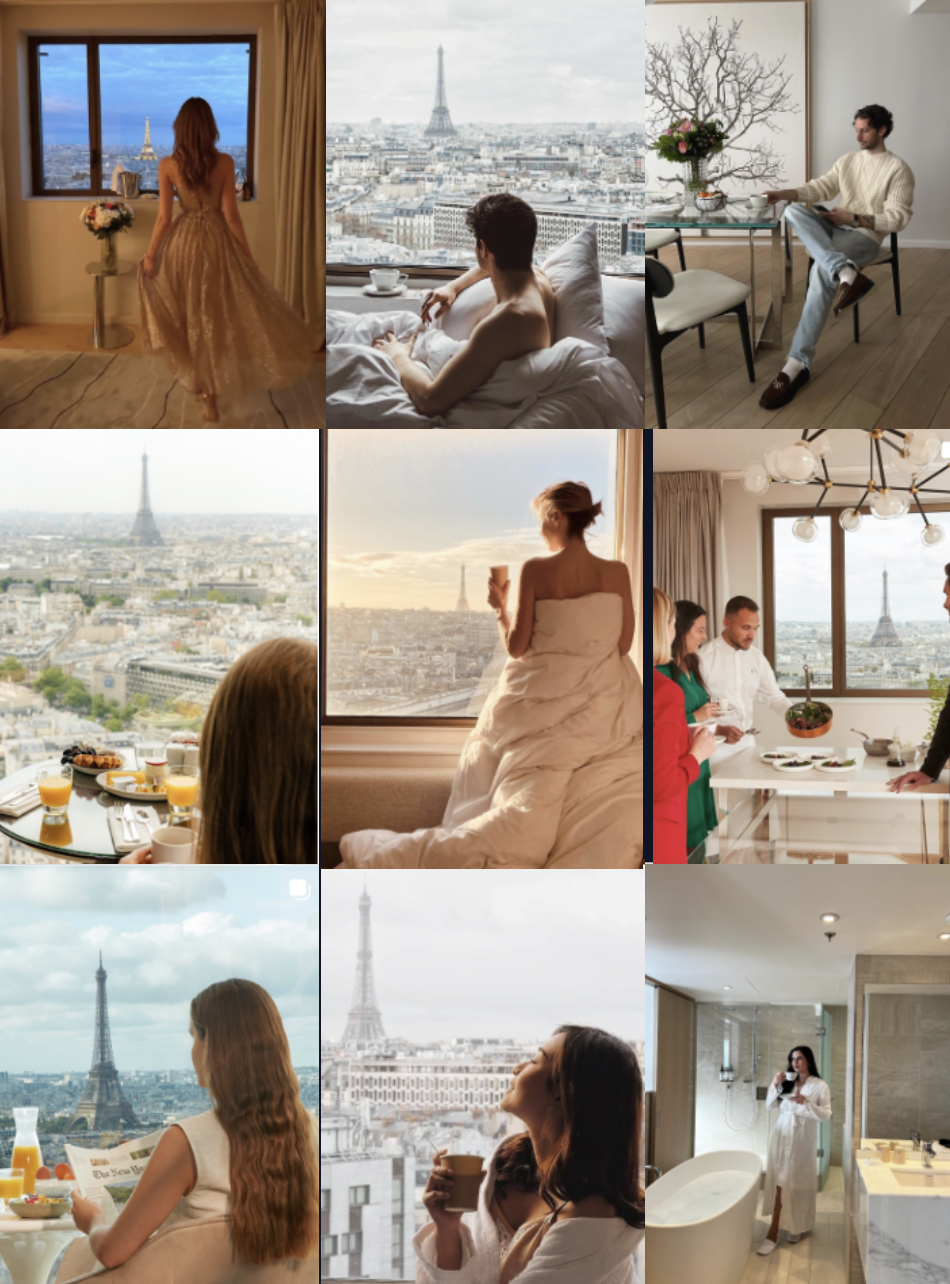
Selection of creators with distinct interests, including travel bloggers and business mom profiles highlighting premium family stays, as well as influencers focused on solo travel and urban exploration.
This diversity allowed for reaching multiple segments without diluting the brand image.
A structured UGC production
The content generated by creators was intended to document the real experience of the hotel's services.
A precise casting ensured alignment with the establishment's values, tone, and message.
A premium event within the hotel
Organization of an immersion session to present the services and dining offerings, particularly the bar, in order to produce authentic content rooted in lived experience.
Outline of the intervention
The support was structured in several stages:
Definition of the influencer strategy and priority targets
Selection of 14 influencers and content creators
Writing detailed creative and technical briefs
Production of photo, video, story, and reel content
Deployment of advertising campaigns based on the produced content
Optimization of the social media strategy to enhance engagement and editorial consistency
Each creator received a detailed brief specifying themes, values, key messages, and expected formats, in order to ensure a usable and coherent production.
Observed results
The strategy allowed for several notable developments:
Attraction of a younger and more connected community within the establishment
Increase in interactions and reach of content on Instagram and Facebook
A reduction of -20% in customer acquisition cost.
Increase of nearly 25% in overnight stays compared to the previous period.
+25%
In overnight stays compared to the previous period.
-20%
In customer acquisition cost.
x3
Increase in reach on social media.
Creation of a stock of reusable content to support the hotel's communication.
Ce cas montre qu’une stratégie d’influence structurée peut permettre à un hôtel premium, historiquement orienté business, d’élargir sa cible sans renier son positionnement, en rendant son expérience plus lisible et plus désirable en amont de la réservation.